Making Room for Play: Why It Matters in Grief Support for Children and Teens
Grief can feel heavy for children, teens, and the adults caring for them. Emotions may arrive all at once: sadness, confusion, anger, longing. For young people who don’t always have the words to explain what they’re feeling inside, grief can show up in both loud and quiet ways — through big emotions, withdrawal, changes in academic performance, or social engagement.
Amidst all of these emotions, one of the most powerful ways for kids and teens to communicate is also one of the most natural: play.
At The Children’s Room, we see every day how play creates space for expression, connection, and understanding, not always as a distraction from grief, but as a way to move through it.
How Children Process Grief Through Play
Children don’t always grieve with words. As TCR’s Program Director for Center-Based Services, Jen Noonan explains: “Play is an essential way for children and teens to process emotions, communicate what can be hard to put into words, and regain a sense of control in their lives, particularly after a loss.”
After someone dies, children may feel untethered from what once felt steady. Through art, games, storytelling, or shared activities, they can explore feelings and express what might otherwise remain unspoken.
Importantly, play isn’t about avoiding what’s hard. “It can be a powerful pathway for children to process loss, remember who died, and tell their story. And sometimes, play offers something just as important: the chance for a child to simply be a kid.”
Why Play Matters
Play is essential for kids and teens—even after a loss. It is how they express what they feel, make meaning of their experiences, and connect with themselves and others. When children and teens who are grieving are able to play, they also discover that it’s okay for laughter and loss to exist side by side. Holding both helps them weave the good and the hard into their lives—and grow more resilient along the way.
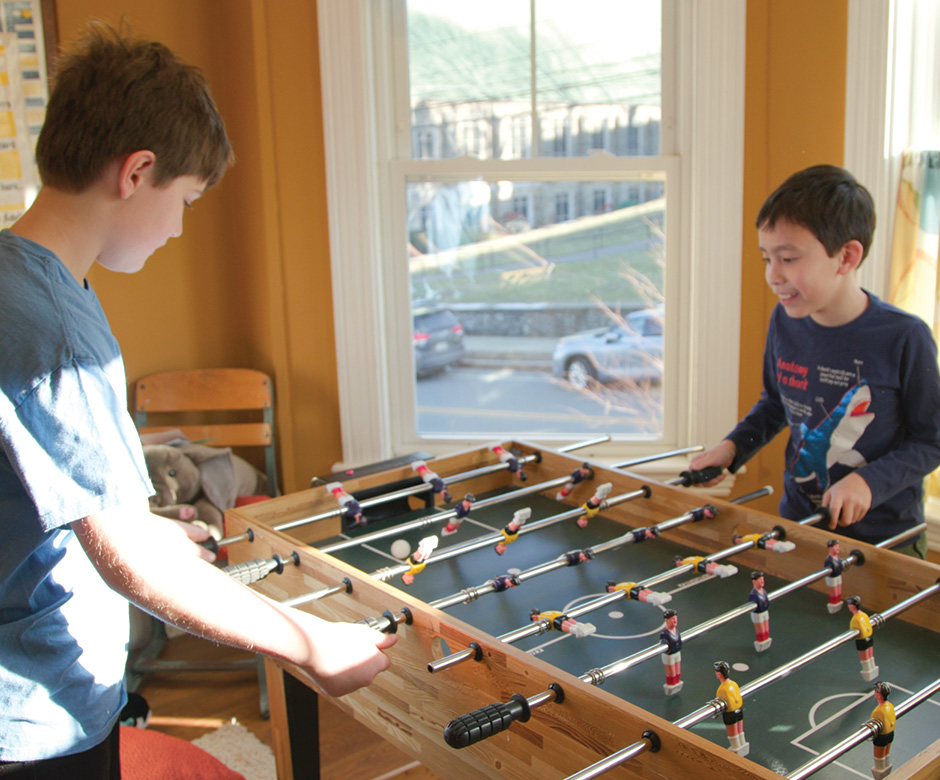
Play is a critical component of our grief groups, offering kids and teens a way to externalize thoughts and emotions, whether related to grief or not. Sometimes that looks like hitting a punching bag in our high-energy room. Sometimes it’s a competitive game of foosball. Sometimes it’s laughter shared over pizza. And sometimes, it’s just being with someone who gets it.
When Play Can Feel Complicated for Families After Loss
For parents and caregivers, engaging in play after someone has died can feel complicated. Some adults feel too weighed down to join in. Others carry guilt, as if enjoying a moment of laughter diminishes their loss.
Jen sees this often. “Allowing space for play doesn’t erase what happened. It creates room for connection, and over time can help families realize that joy and grief can coexist.”
Making Room for the Full Experience of Grief
Grief support for children and teens isn’t about fixing what can’t be fixed. It’s about creating spaces where young people can show up as they are.
Making room for play means making room for the full range of human experience, sadness and connection, heaviness and lightness. And in that space, children and teens can feel less alone.
Learn more about our services here or contact us with any questions. We’re here to help.